01
Firmware analysis
Code and data structure, memory references and how they connect.


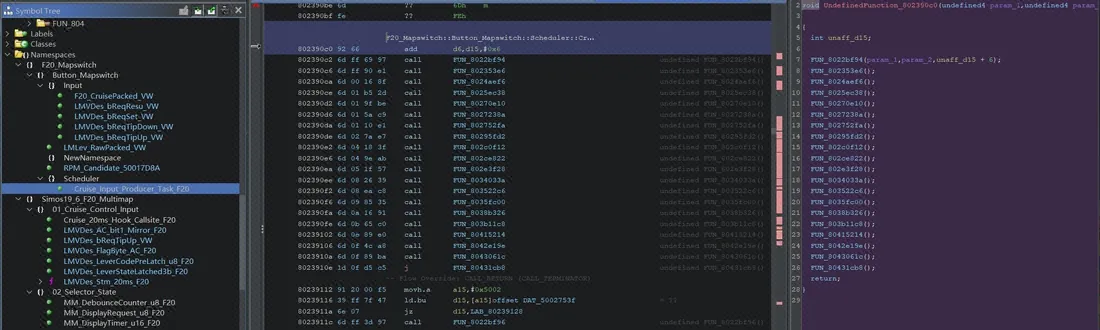
We read the firmware — its structure, functions, data references and control logic — to understand how a platform behaves, or to build new behavior on it.
Engineering scope
Reverse engineering goes beyond map editing:
we work at the level of code, data and control logic.
Code and data structure, memory references and how they connect.
Tracing cross-references, calls and variables to find the logic your project depends on.
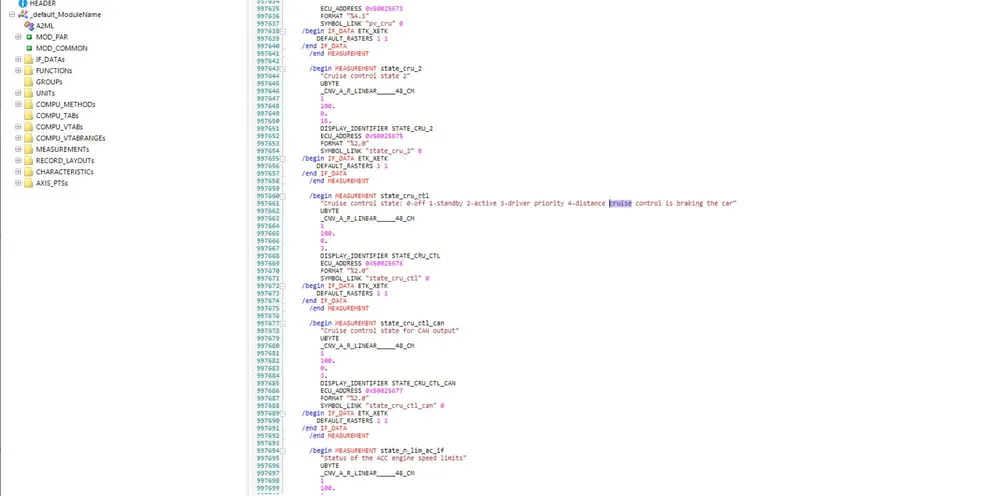
Linking what the firmware does to how the calibration behaves.
New control logic, built once we've confirmed it's feasible on your platform.
Processor families
Firmware analysis on the main automotive microcontroller families.
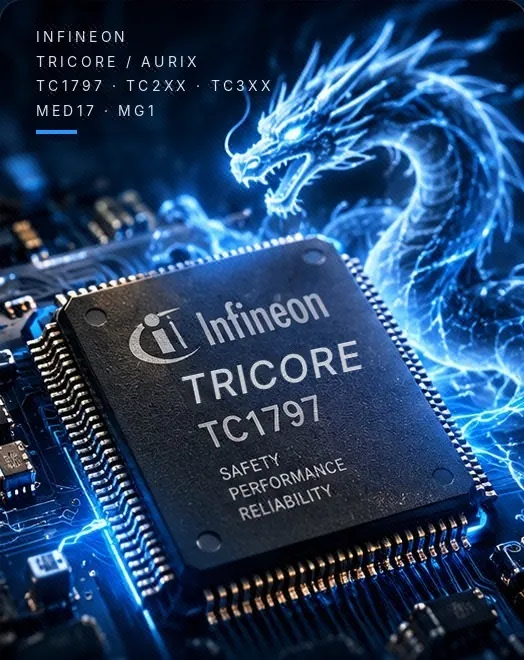
Common in Bosch engine ECUs such as MED17 and MG1, and in Continental units such as Simos 18 and Simos 19.
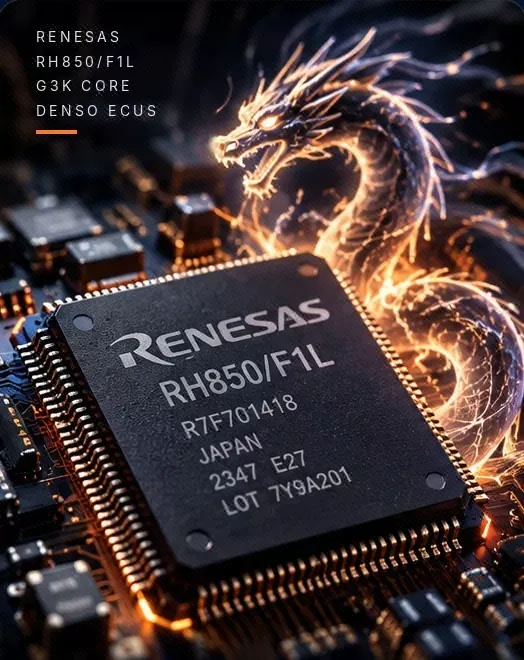
Used in Denso and other Japanese-supplier control units.
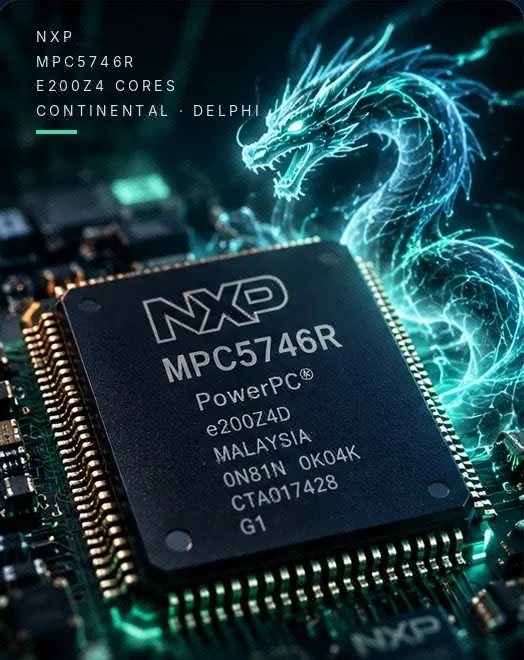
PowerPC e200 cores, common in Continental and Delphi ECUs and TCUs.
MapSwitch / CAN / UDS
Availability depends on the exact ECU family, software version and vehicle.
Development on selected platforms, covering map selection, switching logic, vehicle inputs and validation.
Signal and message analysis for vehicle-state interpretation or input integration where required.
Diagnostic communication and service behavior.
How a project runs
We check the hardware, software version and firmware before we commit.
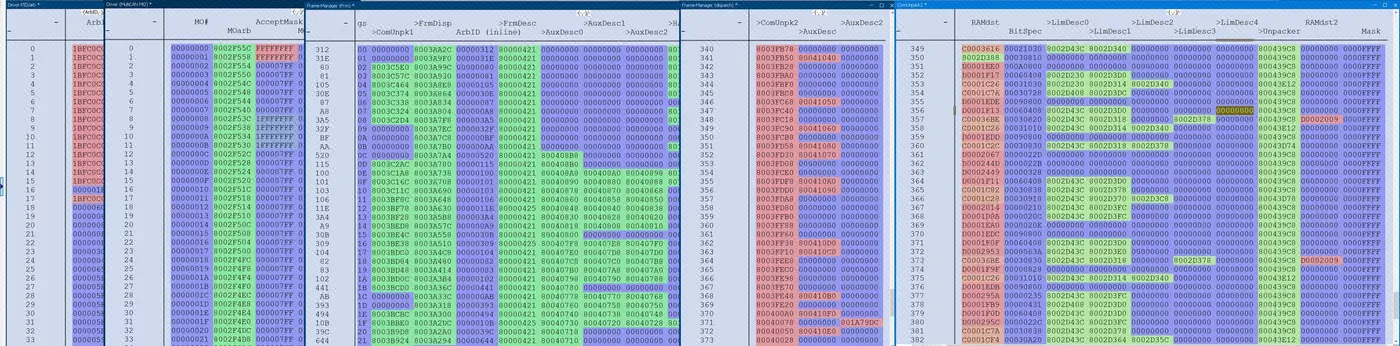
Code, data and memory structure reviewed in Ghidra.
Connecting firmware behavior to what the project needs.
Changes or new functions built into the firmware.
Changes verified on the bench before they go into the car.
Logged drives or dyno runs to confirm the behavior.
Handover
The functions, references and control relationships that matter for your project, written up.
Your firmware, identifiers and our implementation details are never published.